
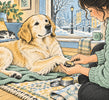
Dog Paw Care: A Complete Guide
, by My Furry Fren Editorial Team, 7 min reading time
, by My Furry Fren Editorial Team, 7 min reading time
Your dog's paws carry them over hot pavement, cold ice, salted roads, and rough trails. A little routine care prevents a lot of pain. Paws are tough, but they're not indestructible — and because dogs can't tell us when their feet hurt, checking them regularly is one of the simplest things you can do for your dog's comfort.
Get familiar with your dog's paws when they're healthy, so you'll notice changes quickly. A healthy paw has:
The space between the toes and the pad area is a classic hiding spot for problems, so that's where to look first every time.
Once a week — and after any long walk or hike — look at each paw carefully:
Grass seeds (foxtails) are a frequent culprit: they can burrow into the skin, work their way deeper, and cause serious infections. If you can't easily remove one, don't dig — see your vet.
Wipe or rinse paws after walks, especially after salted, gritted, or muddy streets. De-icing salt and chemical ice melts can irritate pads and are toxic if licked off, so rinse well and dry carefully — including between the toes. Trapped moisture softens the skin and creates the perfect conditions for irritation and infection.
Keep a stack of pet-safe grooming wipes and towels by the door for quick clean-ups. For a full routine, our dog grooming and care collection covers the basics.
Most paw problems fall into a handful of familiar categories:
Knowing these helps you match what you see to the right response — a quick rinse versus an urgent vet visit.
For minor paw issues at home, a calm approach works best:
Carrying a small first aid pouch — wipes, tweezers, paw balm, and a bandage — makes you ready for most minor mishaps on the trail. Deeper cuts, embedded objects, and burns should go to your vet.
Paw pads can dry out and crack, particularly in winter or on hot, dry ground. A pet-safe paw balm or wax helps keep pads supple. Apply it, then keep your dog from licking it off until it absorbs. Never use human lotions on paws — many contain ingredients dogs shouldn't ingest.
Long nails change how your dog stands and walks, pushing the toes into an unnatural position and adding strain to the whole leg. Over time that can contribute to joint discomfort. Nails that are too long also snag and tear more easily.
Trim or grind nails every few weeks, depending on how quickly they grow and how much your dog wears them down. Many dogs dislike clippers near the quick, so a quiet rotary grinder can be a gentler, easier alternative. Take off small amounts at a time, and keep a styptic powder handy in case you nick the quick. If nail trimming is a struggle, our nail care collection has tools designed to make it safer and calmer, and your vet or groomer can help.
Make nail care a positive routine. Handle your dog's paws gently during calm moments, reward cooperation, and do a little at a time rather than forcing a full trim in one go. A dog who associates paw handling with treats is far easier to care for over a lifetime.
Different seasons bring different paw risks:
Carrying a small first aid pouch — wipes, tweezers, paw balm, and a bandage — makes you ready for most minor mishaps on the trail.
Contact your veterinarian if you notice:
These signs can indicate infection, a foreign body, a burn, or an injury that needs treatment — and delaying care lets small problems become big ones.
How often should I check my dog's paws? Weekly, and after every long walk, hike, or day on salted streets.
Are booties actually worth it? For many dogs, yes — they protect against salt, ice, hot pavement, and rough ground. Introduce them slowly and reward wearing them.
Can I use human moisturizer on paw pads? No. Use a pet-safe paw balm, not human lotion, and prevent licking until it absorbs.
My dog's pads are cracked — what now? Use a paw balm and limit time on harsh surfaces. If cracks are deep, painful, or bleed, see your vet.
How often do nails need trimming? Usually every few weeks. If you hear clicking on hard floors, they're due.
Good paw care is simple: check weekly, clean and dry after walks, protect against heat and salt, keep nails trimmed, and moisturize dry pads. Most paw problems are preventable with a little routine, and the ones that aren't are far easier to treat when you catch them early. When something looks painful, swollen, or infected, let your vet take a look.


