
Why Do Dogs Chase Their Tails?
, by My Furry Fren Editorial Team, 7 min reading time
, by My Furry Fren Editorial Team, 7 min reading time
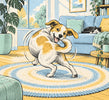
Watching a dog spin after their own tail is genuinely funny. For most dogs it's harmless fun, a burst of puppy play, or a quick way to burn off energy. But in some cases tail chasing is a signal that something — boredom, stress, or even a medical problem — needs attention. Knowing the difference helps you decide whether to laugh or to take action.
Several everyday explanations are completely normal:
If it happens now and then, your dog looks relaxed or playful, stops easily, and isn't hurting themselves, it's usually nothing to worry about.
The single most common cause of frequent tail chasing is a dog whose body and brain need more to do. Under-exercised dogs invent their own entertainment, and spinning is one option. A high-energy dog stuck indoors with nothing to chew, sniff, or solve may circle the room, chase their tail, or nip at their flanks.
The fix is enrichment: longer or more interesting walks, "sniffy" time where your dog leads and explores, training games, and food puzzles. A puzzle toy that makes your dog work for dinner tires the mind far more than a short march around the block.
Dogs are brilliant at learning what gets a reaction. If tail chasing makes you laugh, gasp, or rush over, your dog files it away as a reliable way to grab your attention — and repeats it. The trap is that even scolding counts as attention.
If you'd rather the behavior faded, respond calmly and redirect to something you do want, like a toy or a quick training cue. Reward the calm behavior and let the spinning stop paying off.
Sometimes tail chasing isn't play at all. Watch for these red flags:
Possible causes include skin problems, fleas or allergies, an injury, impacted anal glands, and pain anywhere in the hind end — all of which can make a dog turn and bite at the area. In other cases, tail chasing becomes a genuine compulsive disorder, a repetitive behavior the dog can't easily switch off. Compulsive disorders are more common in certain breeds and can be linked to stress and under-stimulation. If any of the red flags above fit, see your vet.
Tail chasing sometimes comes as a package with other repetitive habits — shadow chasing, light chasing, spinning in circles, flank sucking, or fly snapping at imaginary insects. When several of these appear together, or when one becomes intense and hard to interrupt, it points more strongly toward a compulsive disorder rather than simple play. These behaviors are often self-rewarding, which is exactly what makes them so persistent.
Compulsive behaviors are more common in certain high-drive breeds and are frequently linked to stress, frustration, or a lack of stimulation. They can also be triggered or worsened by pain. That's why an honest look at your dog's overall life — exercise, enrichment, routine, and health — is the right place to start.
Age gives useful clues. Puppies commonly chase their tails as they discover their own body and learn to play; this usually fades on its own. A young adult who spins mainly when under-exercised is usually telling you they need more to do. A middle-aged or senior dog who suddenly starts chasing their tail is the most concerning pattern, because a new behavior in an older dog often signals discomfort, itchiness, or pain rather than play.
Breed matters too. Herding and high-energy breeds tend to need more mental work, and they're often the ones who develop repetitive behaviors when that need goes unmet. Understanding these patterns helps you decide whether to schedule a vet visit or simply add a puzzle toy to the daily routine.
Yes — more often than owners expect. A dog may spin and snap at their tail or hind end because something there genuinely hurts or itches. Fleas, allergies, hot spots, an anal sac problem, a spinal issue, or an injury can all prompt that behavior. If the chasing comes with licking, biting, scooting, hair loss, or redness around the rear, treat it as a physical symptom first and have your vet take a look.
For ordinary, healthy tail chasing, the approach is simple:
If the behavior looks compulsive, includes self-injury, or doesn't improve with more enrichment, professional help is wise. A vet or veterinary behaviorist can rule out medical causes and build a plan.
Book a visit if your dog:
These signs can point to pain, parasites, allergies, or a compulsive disorder, and treating the underlying cause matters.
Is tail chasing ever dangerous? Rarely — but it can be if your dog injures the tail or tail base. Otherwise, occasional playful spinning is harmless.
Why does my older dog suddenly do it? A sudden new habit in an adult dog can signal pain, itchiness, or a compulsive issue. Get it checked.
Do certain breeds chase their tails more? Some high-drive and herding breeds seem more prone, but any dog can develop it.
Should I stop my puppy from chasing their tail? Occasional puppy play is fine. Just don't turn it into an attention game by reacting every time.
Can more exercise really stop it? Often, yes — when boredom or pent-up energy is the driver, adding exercise and enrichment resolves it.
Most tail chasing is harmless fun that fades as puppies grow or improves once a dog gets more to do. Where it becomes frequent, obsessive, or injures your dog, treat it as a symptom — of boredom, stress, pain, or a compulsive disorder — and get veterinary guidance. More exercise, more enrichment, and less rewarded attention solve the majority of cases.


