
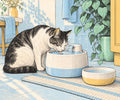
How to Get Your Cat to Drink More Water
, by My Furry Fren Editorial Team, 7 min reading time
, by My Furry Fren Editorial Team, 7 min reading time
Cats evolved as desert hunters, which means their bodies are built to conserve water — and their natural thirst drive is weak. In the wild they got most of their moisture from prey. A cat eating only dry food today may take in far less water than their body actually needs, and chronic low-level dehydration is a major contributor to urinary and kidney problems later in life.
Encouraging your cat to drink more is one of the kindest, simplest things you can do for their long-term health. The good news is that small changes to bowls, water sources, and food make a real difference.
Cats are famously particular, and it isn't random. A few instincts explain most of their picky behaviour:
Work with these instincts instead of against them, and you'll see intake rise without any pressure.
The simplest wins come from the bowl and the water inside it.
A fountain is one of the most effective tools for a reluctant drinker. Moving, filtered water triggers a cat's instinct to drink, and the constant circulation keeps it fresh. Many owners notice their cat drinking noticeably more after switching. Keep it clean — rinse the pump and reservoir regularly — so the water stays genuinely appealing.
If your cat is nervous about new objects, place the fountain where it already likes to hang out and let them investigate on their own terms.
One central water station isn't enough for many cats. Put several bowls in quiet spots — a bedroom corner, a hallway, near a favourite perch — and keep at least one well away from the food bowl. Cats who feel "watched" or crowded may avoid a single busy location. Multiple options mean more chances to drink through the day.
Food is often the biggest lever of all, because cats take in much of their water from what they eat.
If you change your cat's diet, do it gradually over a week or so to avoid stomach upset.
Hydration is closely tied to urinary health, so the litter box is your daily health report. Clumping litter makes it easier to see how much your cat is urinating. A well-hydrated cat produces a normal number of decent-sized clumps. Small, frequent trips, or none at all, are worth attention — especially in male cats, who are prone to dangerous urinary blockages.
As a rough guide, a healthy cat drinks about 3.5 to 4.5 ounces of water per 5 pounds of body weight per day — but that figure includes the moisture in food. A cat on canned food may drink very little from the bowl and still be perfectly hydrated, while a cat on dry food usually needs to drink more. Rather than fixating on ounces, watch the litter box: steady, normal-sized clumps are a good sign. A sudden change in thirst or urine output is the thing to pay attention to.
Cats hide discomfort well, so it helps to recognise the quiet signals:
Mild dehydration often improves with the strategies on this page plus access to wet food. But repeated dehydration, or a cat who won't drink at all, needs a vet — especially with vomiting, diarrhea, or any urinary sign.
Some cats respond to a little encouragement. A gentle trickle from a tap can tempt a hesitant drinker, and an occasional running faucet works as a novelty. You can also float a clean, cat-safe toy in a wide bowl so the water moves and becomes more interesting. Never leave a tap running unattended, and always keep a normal bowl available too — a cat shouldn't have to rely on a human turning the water on.
Encouraging water is preventative care — it is not a substitute for treatment. Contact your vet promptly if you notice:
A male cat who strains to urinate and produces little or nothing may have a life-threatening blockage and needs emergency care. Never wait on urinary signs — call your vet same-day. Increased thirst can also signal diabetes, kidney disease, or hyperthyroidism, all of which need a proper diagnosis.
Do cats really drink more from fountains? Many do — the movement and constant filtration appeal to them. It's one of the easiest changes to try.
How much water should a cat drink? Roughly 3.5–4.5 oz per 5 lb of body weight per day, including the moisture in food. Wet food supplies a large share of that.
Is tap water fine? Usually, yes. But some cats reject the taste of certain tap water, so filtered water can help.
Should I add water to kibble? It's a simple way to boost intake. Add warm water, serve right away, and discard anything left out.
My cat barely drinks — is that always bad? Cats on wet food naturally drink less. If intake suddenly changes, or you see urinary or thirst changes, see your vet.
Fresh water, the right bowl, multiple locations, a fountain, and some wet food work together to keep your cat better hydrated. Pair those habits with a daily glance at the litter box, and you'll catch problems early. Hydration support is preventative — for real symptoms, your vet is the only answer.
Explore our cat fountains and feeders and cat bowls to make drinking easier.


