
How to Reduce Dog Shedding (What Actually Works)
, by My Furry Fren Editorial Team, 7 min reading time
, by My Furry Fren Editorial Team, 7 min reading time
Every dog sheds. It's how the coat replaces old, worn fur with new growth, and it happens year-round in most breeds. The difference between "a few hairs on the sofa" and "a second dog made of fur under the bed" usually comes down to three things: the type of coat your dog has, how consistently you groom them, and their overall health. None of it requires expensive products — it requires a routine you'll actually keep.
Here's what genuinely moves the needle, what's a waste of money, and the red flags that mean shedding is a symptom rather than a season.
Not all coats shed the same way, and the right tool depends entirely on the coat in front of you.
Double coats are the ones that "blow" — the undercoat releases in large amounts, usually twice a year as the seasons change. The topcoat simply traps the loose undercoat until it lets go all at once. Knowing when to expect that makes the whole thing far less overwhelming.
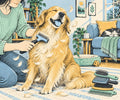
This is the single biggest lever you have. Loose fur that you remove with a brush is fur that never lands on your floor. Matching the tool to the coat is what makes brushing effective instead of just moving hair around.
During a heavy shed, a few minutes every day or two makes a visible difference. The rest of the year, twice a week is plenty for most dogs. Brush in the direction the coat grows, work in small sections, and stay gentle around the belly, armpits, and behind the ears, where the skin is thin.
A warm bath with a gentle dog shampoo loosens dead fur, so it ends up on the towel instead of your carpet — exactly where you want it to go. The key is timing: brush thoroughly before the bath to pull out the bulk, then again once the coat is dry to catch what the water loosened.
Don't overdo it. Bathing every four to eight weeks suits most dogs. Too-frequent baths strip the natural oils that keep skin healthy, and dry, irritated skin tends to shed more, not less. Always dry your dog properly afterwards — especially double coats, where trapped moisture can lead to skin problems.
Dull, brittle hair breaks easily and sheds more. A complete, balanced diet — along with plenty of fresh water — supports a stronger coat and healthier skin. Omega-3 fatty acids, found in many fish-based foods and in some supplements, are commonly recommended for skin and coat condition.
If you're thinking about a supplement or a diet change, ask your vet first so it's matched to your dog's age, size, and health. Just as important is what you don't ignore: shedding that suddenly increases, or that arrives with bald patches, red skin, or constant scratching, is a signal to investigate rather than brush harder.
You'll never eliminate shedding entirely, but you can stop it from taking over the house.
These habits don't reduce shedding, but they cut the daily frustration dramatically — and they make the grooming routine easier to stick with.
"Normal" varies enormously. A Poodle may leave almost nothing behind, while a Husky in a full coat blow can fill a grocery bag in a single session — and both are perfectly healthy. What matters most is change. Once you know your dog's baseline, you can spot a problem early.
Two patterns are expected. Seasonal shedding spikes in spring and fall, when the coat turns over to match the weather. Year-round shedding happens in dogs kept indoors under steady temperature and light, which blurs the seasons and can mean low-level shedding all year. Neither needs treatment, just grooming. Shedding that's suddenly heavier, patchy, or paired with itchy or damaged skin is different — and that's where a vet comes in.
Shedding is usually a grooming issue, but sometimes it's a health one. Book a vet visit if you notice:
These can point to allergies, parasites, skin infections, or hormone conditions. Your vet can diagnose the cause and recommend the right treatment — a deshedding tool won't fix a medical problem.
What's the best brush for a double coat? An undercoat rake or a dedicated deshedding tool, used gently several times a week. A standard bristle brush barely dents an undercoat.
Does shaving reduce shedding? No. Shaving removes the topcoat but not the undercoat, and on double-coated breeds it can permanently damage how the coat grows back. Never shave a double-coated dog to control shedding.
Why is my dog shedding so much right now? Spring and fall shedding seasons are normal, especially in double-coated breeds. Shedding that's heavy all year, or that comes with skin changes, needs a vet check.
Can I stop shedding with food alone? Nutrition supports a healthy coat, but diet alone won't stop normal shedding. Consistent grooming does most of the work.
How often should I vacuum? As often as you need to stay on top of it — every day or two during a seasonal shed is common in double-coat homes.
Consistent brushing with the right tool, sensible bathing, good nutrition, and a few household habits do the vast majority of the work. You won't stop shedding — no honest guide will promise that — but you can absolutely keep it under control. Sudden or patchy changes deserve a vet visit rather than another round with the brush.
Match the tool to the coat with our brushes and deshedding tools, and keep bath days simple with dog shampoos and sprays.


