
How to Stop Your Cat from Scratching Your Furniture (Without Scaring Them)
, by My Furry Fren Editorial Team, 5 min reading time
, by My Furry Fren Editorial Team, 5 min reading time
Scratching is one of the most natural things a cat does. It stretches the muscles in their back and shoulders, sheds the dull outer layer of their claws, and leaves both a visual and a scent mark that says "this is mine." When your cat claws the corner of your sofa, they aren't being naughty or getting revenge — they're simply doing what cats are built to do, on the most convenient surface they can find.
That's the good news. You can't stop a cat from scratching, but you can absolutely redirect it. With a little patience and the right setup, most cats will happily leave your furniture alone in favour of something that's actually designed for them. Here's how to do it calmly, and without ever scaring your cat.
The single most effective thing you can do is provide a scratching surface that's more appealing than your sofa — and then make sure it's the right kind. Cats have preferences, so it helps to offer a mix:
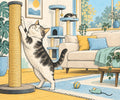
Vertical posts let a cat stretch up to their full height, which is what most cats instinctively want. A tall, sturdy post (at least as tall as your cat can reach with their front paws extended) wrapped in sisal rope or carpet is ideal. If it wobbles, many cats won't use it — stability matters.
Horizontal scratchers — flat cardboard or sisal pads that sit on the floor — suit cats who like to dig their claws in while lying down.
Angled and curved scratchers give a middle option and often win over cats who ignore both flat and vertical ones.
A good cat tree combines a tall scratching surface with a place to perch, which doubles its appeal. You can browse our cat trees and towers for options with built-in sisal posts.
This is the step most people miss. Cats scratch in places that feel important to them — often right next to where they sleep, or beside a favourite doorway. If you put the new scratching post in a quiet corner the cat never visits, they'll ignore it.
Instead, place it directly next to the spot they're already damaging. You want the cat to reach for the post instead of the sofa, without having to change their habits. Once they're reliably using it, you can slowly move it a few inches at a time toward where you'd prefer it to live.
You can also make a new scratcher instantly more attractive by rubbing it with a little catnip, or by playing with a wand toy around it so the cat associates it with fun. Our cat toys and teasers are great for exactly this.
While the cat is learning, protect the furniture they're drawn to. Double-sided sticky tape, a temporary sheet or throw over the arm, or a scent they dislike (citrus works for many cats) can all discourage the habit without punishment. You're not trying to frighten the cat — just making the sofa feel like a slightly less rewarding place to scratch.
Never use spray bottles, loud noises, or physical corrections. They don't teach the cat what to scratch, they erode trust, and they can create anxiety-driven behaviour that makes the problem worse.
Regular nail trims blunt the tips of the claws, so even an occasional scratch does far less damage. If your cat is new to trimming, go slowly and pair it with treats. A calm routine that includes daily play and a good scratch is a big part of the answer: a tired, stimulated cat scratches less out of boredom.
Declawing is a painful, irreversible surgery that removes part of the cat's toe — it's banned in many countries and is never a humane solution for a behaviour problem. Punishment doesn't work either, because cats can't connect a delayed scolding to something they did minutes ago. Redirect, don't punish.
Most cats adjust within a few weeks if the right scratcher is in the right place and the furniture is protected during the transition. Be consistent, reward every time you catch them using the post, and resist the urge to move things too quickly.
Do scratching posts have to be tall? Yes for vertical scratchers — a cat needs to stretch fully upward. A post that's too short encourages them to look elsewhere.
Sisal or carpet? Many cats prefer sisal rope because it offers resistance and texture. Carpet is closer to some furniture, so it can help a cat transition — but choose a carpet that doesn't match your sofa too closely.
My cat still scratches the sofa. Should I give up? Usually it's a placement issue, not a lost cause. Move the post next to the damage, add a second type of scratcher, and give it a few more weeks.
Are nail caps a good solution? They can help short-term, but they don't address the underlying need to scratch. Use them as a temporary tool alongside proper scratchers, not instead of them.
A cat who scratches is a cat behaving normally. Give them the right surface, put it where they already scratch, protect the furniture while they learn, and skip the punishment. That's a recipe for a calm, happy cat and furniture you can actually keep.
Ready to set your cat up for success? Explore our cat trees and scratching posts, toys, and grooming essentials — all chosen with the same care we'd give our own cats.


