
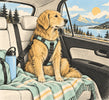
How to Travel with a Dog in the Car (Calm & Safe)
, by My Furry Fren Editorial Team, 7 min reading time
, by My Furry Fren Editorial Team, 7 min reading time
A dog loose in a moving car is a real risk, both to them and to you. In a sudden stop, an unsecured dog becomes a projectile, and even a small dog can cause serious injury. The fix is straightforward: restrain your dog properly, then make the ride pleasant enough that they stop dreading it.
Whether you're doing the weekly vet run or a cross-country road trip, the same principles apply. Here's how to travel calmly and safely.
Many owners let their dog ride loose, and it works fine — until it doesn't. In a crash, an unrestrained dog can be thrown through the cabin or out of a window. Even in a hard brake, a dog in the front seat can obstruct the driver or be injured by the airbag. Restraint protects everyone in the car, not just your dog.
There's no single "best" option — the best one is crash-tested, properly secured, and one your dog accepts. Common choices:
Avoid letting your dog ride with their head fully out of the window. Debris and air pressure can hurt their eyes and ears.
A dog who only rides to the vet learns to hate the car. Rebuild the association with short, positive trips that end somewhere fun — a park, a sniff-friendly walk, a friend's driveway. Feed a light meal a couple of hours before travel, bring a favourite blanket that smells like home, and keep the cabin calm and quiet. A chew toy or a puzzle feeder can distract an anxious traveller and give them something to do.
Start with engine-on, no-movement sessions if your dog is very nervous, then a two-minute drive around the block, and build up gradually.
Motion sickness is common, especially in puppies, and it often improves with age as the inner ear matures. To reduce it:
For frequent travellers, ask your vet about safe anti-nausea options. Never give human medication — several common human drugs are toxic to dogs.
On longer journeys, plan ahead so the trip stays comfortable:
Even on a mild day, the inside of a parked car can reach dangerous temperatures within minutes — and cracking a window doesn't make it safe. Dogs cool themselves poorly and overheat quickly. If you can't take your dog inside with you, leave them at home. On hot days, take extra care: walk on cooler surfaces and watch for signs of heat stress.
If you go the crate route, look for one described as crash-tested and anchor it so it can't slide, tip, or be thrown forward. Place it behind a seat where possible, not loose on a seat. For very small dogs, a secured car seat or booster keeps them contained and lets them see out. Whichever option you choose, practise at home first — let your dog spend time in the crate or seat while the car is parked, with the door open and treats on offer, long before you drive anywhere.
If your dog already trembles at the sight of the car, rebuild the association in tiny steps. Begin with the car parked and the engine off: sit nearby, feed treats, and let them explore. Next, engine on but stationary. Then a one-minute drive around the block, ending somewhere neutral or fun. Only extend the distance once each step feels calm. Rushing a frightened dog back into long journeys tends to undo progress. Patience here pays off for years of easier travel.
A restrained dog makes you a calmer, safer driver. Keep the cabin cool and quiet, avoid letting your dog climb into your lap, and pull over if they become distressed rather than trying to soothe them at the wheel. If you're travelling with more than one dog, secure each separately so they can't tangle or distract one another. Keep the music low and the mood relaxed — dogs pick up on tension, and a calm driver usually means a calm passenger.
Most travel nerves settle with practice, but some situations call for professional help.
Your vet can rule out medical causes, advise on anti-nausea or anxiety options, or refer you to a behaviourist. Never give human medications without veterinary guidance.
What's safest — a crate or a seat belt? Either, as long as it's crash-tested and properly secured. Consistency matters more than the style you pick.
How do I stop my dog whining in the car? Desensitise with short, positive trips and reward calm behaviour. Build up distance slowly.
Can puppies travel in the car? Yes, but keep trips short until they're older and more used to it, and secure them properly from the start.
Should my dog ride in the front seat? No — the back seat or cargo area (properly restrained) is safer, away from the airbag.
How often should I stop on a long drive? Every two to three hours for a break, water, and a potty opportunity.
Secure your dog with a crash-tested restraint attached to a harness, keep the mood calm, and build up trips gradually. Bring water and take breaks, and never leave a dog alone in a parked car. With a little patience, most dogs learn to travel happily — and every trip becomes safer for everyone on board.
Browse our car seats and seat belts for safer journeys, and pair them with a comfortable harness and a travel water bottle.


