
Puppy Teething: What to Chew & When It Ends
, by My Furry Fren Editorial Team, 7 min reading time
, by My Furry Fren Editorial Team, 7 min reading time
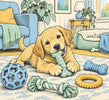
Between roughly three and seven months, your adorable puppy turns into a chewing machine. This isn't bad behaviour — it's teething. Just like human babies, puppies lose their sharp baby teeth and push through adult ones, and chewing soothes the discomfort. Your job is to protect your hands, shoes, and furniture by redirecting every chew onto something appropriate.
Teething is a phase with a beginning, a peak, and an end. Knowing the timeline and the right tools makes it far less stressful for both of you.
Puppies are born with no visible teeth. The baby teeth (deciduous teeth) come in from about two to four weeks, and by six to eight weeks a puppy has a full set of 28 very sharp needles. Then the swap begins:
You may find tiny teeth on the floor or in the crate — that's normal, and most puppies swallow them without any problem.
The trick is to make the right thing more rewarding than the wrong thing. Offer a rotating selection so novelty keeps your puppy interested:
Keep four or five options on rotation, swapping them out every couple of days so they feel new again.
Some popular chews cause more harm than good.
When your puppy chews something they shouldn't, calmly swap it for an appropriate toy and praise the swap. Punishment confuses a puppy mid-teething and can create hand-shy nipping. If they mouth your hands, go still and boring for a moment, then offer a toy instead — rough hand play teaches a puppy that biting skin is a game.
Prevention is easier than correction. Keep valuables, wires, and shoes out of reach while your puppy learns. A puppy can't chew what they can't reach.
Teething and boredom look identical from the outside. A tired, well-exercised puppy chews far less, so keep up age-appropriate play and short training sessions. Confine your puppy to a safe area when you can't supervise, and always leave two or three approved chews within reach. Rotating toys and keeping a stash in the freezer means there's always a cold chew ready when sore gums flare up.
Chewing isn't naughtiness — it's development. For a teething puppy, the pressure of chewing pushes against sore gums and brings genuine relief, much like a baby with a teething ring. It's also how puppies explore the world and relieve boredom and stress. A puppy who chews nothing at all is rare; a puppy with nothing appropriate to chew will always find something inappropriate. That's why "provide a better option" beats "stop chewing" as a strategy.
Cold is one of the best teething soothers. Freeze a sturdy rubber toy stuffed with a little wet food, plain yogurt, or mashed banana for a long-lasting, numbing treat. You can also freeze a damp, twisted washcloth — supervise so your puppy doesn't shred and swallow it. Make a batch and keep them in the freezer so there's always a cold chew ready. Avoid anything so hard it can't be dented; if you can't press a fingernail into it, it's too hard for a puppy's mouth.
Teething puppies mouth everything, including hands and ankles. That's normal, and it's also the perfect time to teach bite inhibition. The rule is simple: play stops the moment teeth touch skin. Go still and boring for a few seconds, then offer a toy and resume once your puppy is calm. Avoid yanking your hand away, which turns into a chase game, and avoid rough hand play, which teaches that biting people is fun. Consistency across everyone in the household is what makes it stick.
Prevention saves furniture and frustration. Use baby gates or a puppy pen to limit access when you can't supervise, tuck wires into cable covers, and put shoes, remotes, and headphones out of reach. Offer a chew before your puppy gets bored enough to hunt for one, and rotate the selection so it always feels new. If you catch them on something forbidden, swap calmly for an approved chew and praise the swap — never punish after the fact, because a puppy can't connect a scolding to something they did minutes ago.
Loose teeth, a little blood, and drooling are all normal during teething. But contact your vet if you notice:
Prompt checks prevent small dental problems from becoming bigger ones, and your vet can advise on whether retained teeth need removing.
How long does teething last? Usually from about three to seven months, with the worst discomfort around four to six months.
Can I give my puppy ice cubes? Yes, for many puppies — supervise, use smaller pieces, and avoid very hard or huge chunks.
My puppy bites my hands. Is that normal? Very. Redirect to a toy every single time and avoid rough hand play.
Will my puppy grow out of chewing? The pain-driven chewing fades after teething, but chewing for fun and boredom can continue if you don't provide appropriate outlets.
What if my puppy swallows a tooth? It's normal and almost always harmless.
Provide the right chews, redirect calmly, and manage the environment — teething passes. Offer firm-but-not-hard rubber chews, freeze some for relief, and swap toys often. Keep valuables out of reach, reward the right choices, and see your vet about retained or damaged teeth. It's a short phase, and your patience now builds a lifetime of good chewing habits.
Stock up on safe chew toys built for teething puppies, and keep training positive with a few training treats.


