
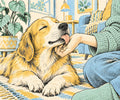
Why Does My Dog Lick Me? The Real Reasons Behind the Kisses
, by My Furry Fren Editorial Team, 7 min reading time
, by My Furry Fren Editorial Team, 7 min reading time
Few things feel better than an enthusiastic dog kiss — but have you ever wondered what is really behind all that licking? Licking is one of the most natural behaviors in a dog’s repertoire, and it can mean very different things depending on the situation. Understanding the “why” helps you respond in a way that supports your dog’s health, training, and emotional well-being instead of accidentally rewarding the wrong behavior.
Licking is hardwired into dogs long before they ever meet a human. Mother dogs lick their newborn puppies to clean them, stimulate breathing, and encourage them to eliminate. Puppies, in turn, lick their mother’s muzzle to beg for food and to signal that they mean no harm. That early “muzzle lick” is one of the first social tools a dog ever learns, and it sticks with them for life.
Dogs also explore the world partly through their tongues. A dog’s tongue carries scent molecules to a special scent organ in the roof of the mouth, so a quick lick can tell them a great deal about what you touched, what you ate, and where you have been. In that sense, licking you is a little like reading a newspaper of your day.
One of the warmest explanations is also one of the simplest: your dog may simply love you. Social grooming is a sign of trust and closeness across the animal kingdom, and dogs are no exception. When your dog licks you calmly while relaxed, they may be reinforcing the bond you share — the same way they might gently groom a canine friend they live with.
Licking can also feel genuinely good for the licker. It releases endorphins, the body’s natural feel-good chemicals, which is why repetitive licking can be soothing and self-rewarding. That helps explain why some dogs lick when they are content — and also when they are uneasy.
Dogs use licking as a calming signal. A quick lick of the nose or the air can mean “I am a little unsure” or “please give me space.” When directed at another animal or a person, a lick to the muzzle, hand, or face can be an appeasement gesture — a polite way of saying “I am friendly.”
Watch the rest of the body to read the message. A loose, wiggly dog who licks during a cuddle is showing affection. A stiff dog who licks repeatedly while turning away, yawning, or licking their lips may be communicating stress. The behavior looks similar, but the meaning is completely different.
Sometimes the reason is refreshingly unromantic: you taste interesting. Human skin carries salt from sweat, plus traces of lotion, sunscreen, and whatever you last ate. After a workout or a salty snack, your hands and feet are especially appealing. Dogs also investigate new textures with their mouths, so a lick can simply be curiosity in action — a gentle way of taking in information about something unfamiliar.
Because taste is a real motivator, it also means the behavior can be unintentionally encouraged. If you apply lotion or cook with strong flavors, expect a few extra licks. Rinsing your hands and offering a chew toy can redirect the attention to something more appropriate.
Dogs repeat what works. If licking once earned a laugh, a pat, or even a “stop that!” — which is still attention — the behavior got reinforced. This is why some dogs become persistent lickers: the payoff may be as simple as your reaction, and any reaction will do.
The good news is that the same learning principle can undo it. Instead of reacting to the lick, reward the behavior you want to see. Ask for a sit, then praise and treat calm, four-on-the-floor manners. Keep a few small training treats handy so you can reward stillness the moment it happens.
Not all licking is happy licking. Dogs who are anxious, bored, or uncomfortable sometimes use licking as a displacement behavior — something to do with nervous energy. Over time this can harden into a compulsive habit, with dogs licking themselves, furniture, or the air for long stretches.
When licking is aimed at the dog’s own body, it can cause real harm. Constant licking of a leg or paw can lead to a hot spot or a thickened, hairless sore called a lick granuloma. If you notice your dog licking one spot relentlessly, that is a signal to look deeper rather than simply telling them to stop.
Occasional licks are completely normal. Problem licking tends to share certain features:
Licking the air, the floor, or the walls — especially with stomach noises — can sometimes point to nausea or a gastrointestinal issue. Your vet is the right person to sort out the cause.
Contact your veterinarian if your dog’s licking is causing skin damage, starts suddenly, or comes with any change in appetite, energy, digestion, or behavior. A vet can check for allergies, parasites, pain, infection, nausea, or a compulsive disorder and recommend an appropriate plan. Do not try to treat persistent licking with home remedies alone, and never give human medications to your dog without veterinary guidance.
Why does my dog lick me so much? The most common reasons are affection, communication, taste, and attention-seeking — but stress or a medical issue can also play a role.
Is it bad if my dog licks my face? For most healthy people it is low risk, but dogs can carry bacteria, so people who are immunocompromised, very young, or elderly may want to avoid face licking.
Can licking be a sign of anxiety? Yes. Repetitive or compulsive licking is often a displacement behavior in stressed or bored dogs.
Should I let my dog lick me? If it is calm, occasional, and you both enjoy it, there is usually no harm. If it is obsessive or causes skin damage, address the underlying cause.
Why does my dog lick the air or the floor? This can be a sign of nausea, dental or gastrointestinal discomfort, or a compulsive habit. It is worth mentioning to your vet.
Dog licking is usually a normal, affectionate behavior rooted in instinct and social bonding. It becomes a concern only when it is sudden, excessive, damaging, or paired with other symptoms. Reward the calm behavior you want, keep your dog mentally and physically engaged, and let your vet rule out medical causes whenever something feels off.


